Things your doctor and/or therapist should be asking you about your anxiety.
As always, I am adding a disclaimer here. I am a Registered Nurse but I am not a doctor or a therapist and I am NOT discrediting any medical professional. There is a time and a place for medication and I believe that. You should always check with your provider and/or therapy team before making changes to your current anxiety treatment. The things I write here are to be used as resources that hopefully empower you and offer additional education / insight. I want these essays to be a tool, somewhere you can start, and something you can refer to on your anxiety journey.
I hear these two scenarios over and over again:
Someone goes to the ER with chest pain/symptoms related to anxiety or a panic attack. The ER rules out any physical threat and sends their patient home with a prescription (usually Xanax) and is told to follow up with a therapist or primary care provider.
Someone else goes to their primary care provider for ongoing low-grade anxiety that won’t quit. They’re asked a few questions about their anxiety and their symptoms and are started on a daily prescription for anxiety with a recommendation to find a therapist.
In medicine the goal tends to lean heavily on “treat the patient’s symptoms” and, while there is a time and place for this, I think when it comes to anxiety and panic attacks this can actually be harmful. I don’t believe that this is any doctor’s fault — they aren’t therapists and, in an ER setting for example, there is not much time to offer reassurance/education outside of the basics. If someone’s heart is racing, the education likely leans towards cardiac symptoms — what to look for and when to come back (and if you’re anxious, this is likely going to make the anxiety worse because now you are subconsciously monitoring for other symptoms).
Again, no doctor is trying to make things worse, but that is where we have to be mindful when it comes to taking the first piece of advice offered to us in relation to treating our anxiety and panic symptoms. Sometimes, the perspective of a medical professional and/or friend or family member lacks proper education and insight when it comes to anxiety and panic and this can leave people feeling helpless, like their options are limited and their resources are scarce.
That’s why I write these essays!
More often than not, when a doctor says “talk to a therapist” before prescribing a medication, the therapy piece goes out the window. A quick fix was offered — and it works for a period of time. But the reality is that therapy isn’t always accessible and not everyone is open to therapy (or they have already tried it with little relief). A little knowledge and guidance goes a long way and my hope is that we can learn to navigate anxiety and panic more mindfully. As a registered nurse I have seen this play out in both my professional and personal life and I want to highlight some things that are important to consider as you navigate your own anxiety or that of a child/loved one!
So, here are some questions that your doctor and/or therapist should be asking you:
“What are you currently doing to help your anxiety?”
Holding yourself accountable first is most important
It is nobody else’s job to “fix” your anxiety or give you the answers. If you truly want to overcome anxiety, you will have to put in the work. This will look different for everyone, and your job is to both listen to your trusted team and also forge your own path. Advocating for yourself doesn’t have to look like being stubborn or dismissive to advice, it can simply be “Thank you for that information, I would like to take some time to consider this.”
“Have you had any recent blood work done?”
Hidden deficiencies can sometimes be the missing piece.
Unfortunately this is a huge missing piece for MANY people and most of us aren’t asked about this when talking about our anxiety (I know I wasn’t). Anxiety is not just about the anxious thoughts and physical symptoms. We want to be considering ourselves a whole. We want to ask ourselves (and hopefully be asked) what could be contributing to this anxiety? Vitamin/mineral/nutrient levels, alcohol/substances, stress/hormone levels, etc. These things are large piece of the anxiety puzzle. If a provider or therapist dismisses this, I would consider another opinion.
“What are your dietary/sleep habits like?”
Your diet and lifestyle should always be considered
This could be an entire blog post — and probably will be at some point. You can do everything else perfectly, but if you are not creating a strong internal foundation you will probably find it harder to overcome your anxiety/panic. For example, things like low blood sugar or caffeine can contribute to anxious feelings and sensations, and poor sleep can leave you feeling on edge and stressed out.
“What can we do to support you without adding a medication (right now)?”
Medication is not (and shouldn’t be) the only solution
Again, there is a time and a place for medication, but I don’t believe it should be the first step for most people. You want to get to the root of the problem, explore your anxiety, before you mask it with a blanket medication. Medications should be considered thoughtfully and shouldn’t be used as a quick fix or replace therapy and the other items mentioned above. Your provider should properly educate you about the risks and side effects and answer any questions you may have. If your provider says that medication is the only solution to anxiety/panic attacks, again, I would consider a second opinion.
For women: “What is your menstrual cycle like? Are you on birth control?”
Anxiety can ebb and flow throughout a woman’s monthly cycle.
Women are cyclical beings, our hormones fluctuate monthly and these hormonal changes can heighten anxious feelings. Your cycle should ALWAYS be considered. For me personally, I noticed that the week before my period I would notice an increase in my anxious feelings. Simply understanding this and becoming aware of it significantly decreased my anxiety over time. Awareness and knowledge are power!
Birth control can also affect the absorption of certain nutrients and minerals and has been linked to depression in some women. Talk to your doctor about this and you guessed it — if they dismiss your cycle or contraception altogether (or recommend getting on the pill to “regulate your hormones”) get another opinion.
For more information on this subject, Beyond the Pill by Dr. Jolene Brighten is a great resource!
“Regulation” and “Rewiring/Retraining” aren’t just buzzwords
These words should enter the chat at some point.
Unfortunately, they can be considered “woo woo” and are somewhat nuanced in both the medical and mental health fields. But these two words are, in my opinion, incredibly important (if not essential) in making it to a place in which you can not only move through the discomfort of anxiety/panic in any moment but also move past it over time. I love the way the images below describe them!
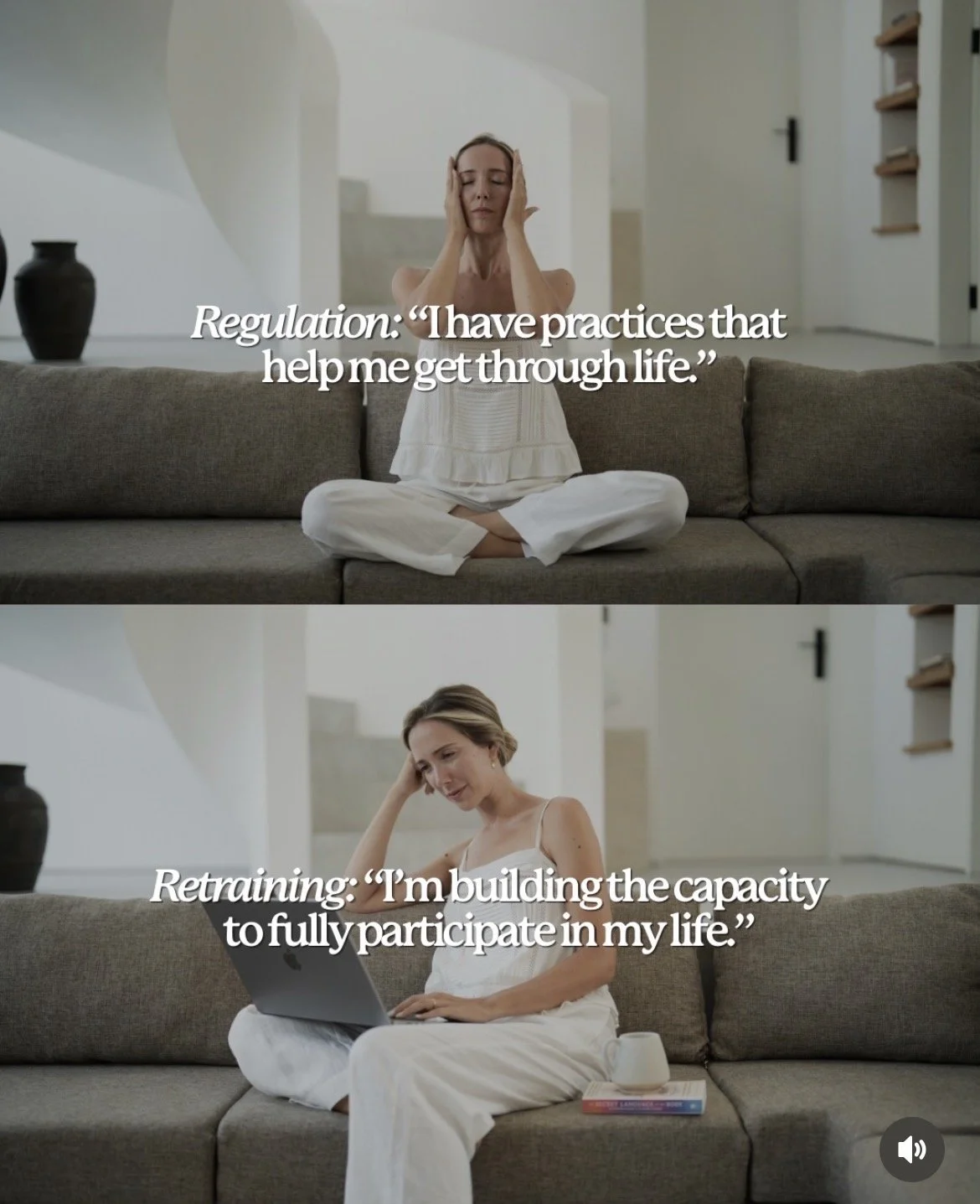
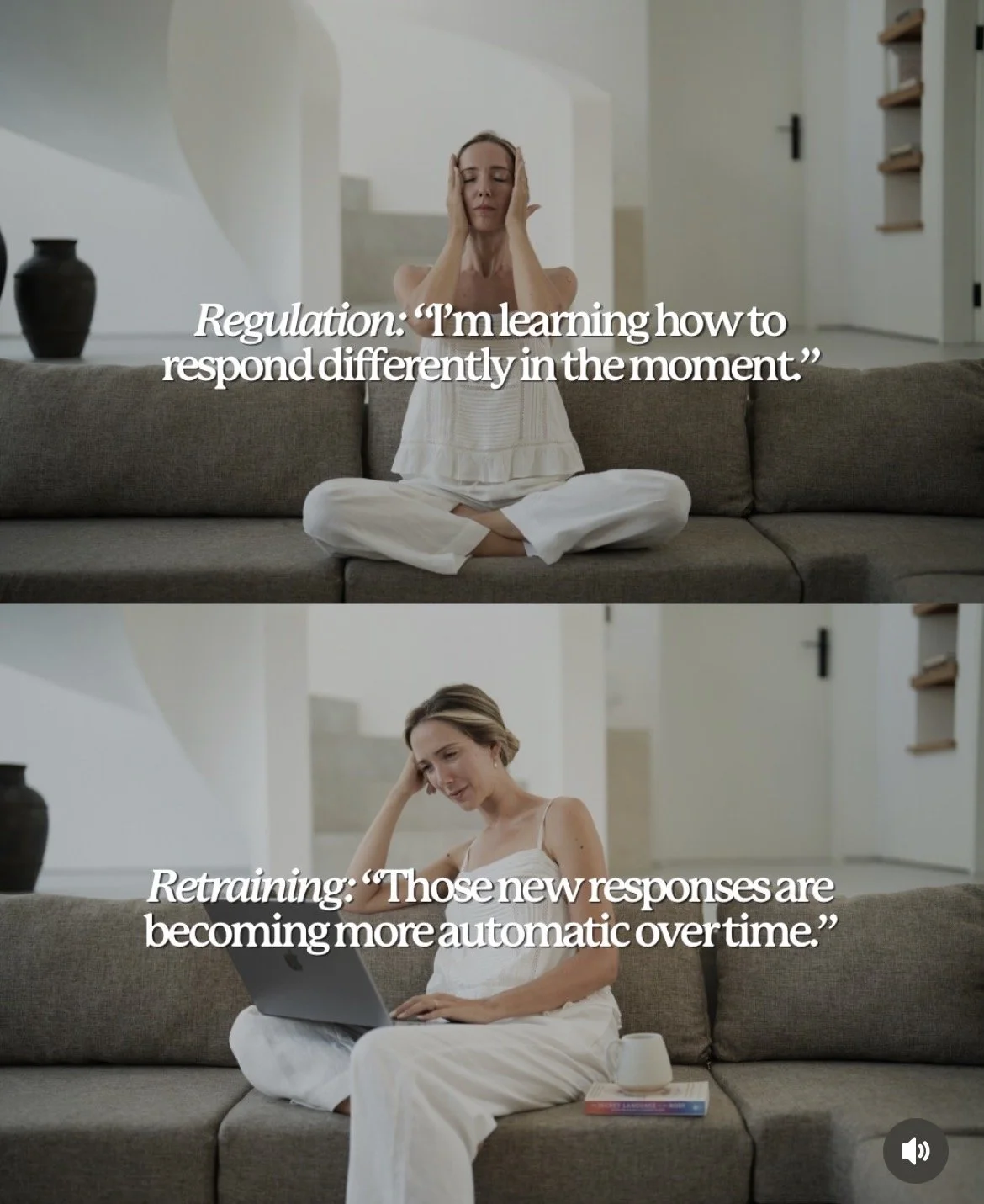
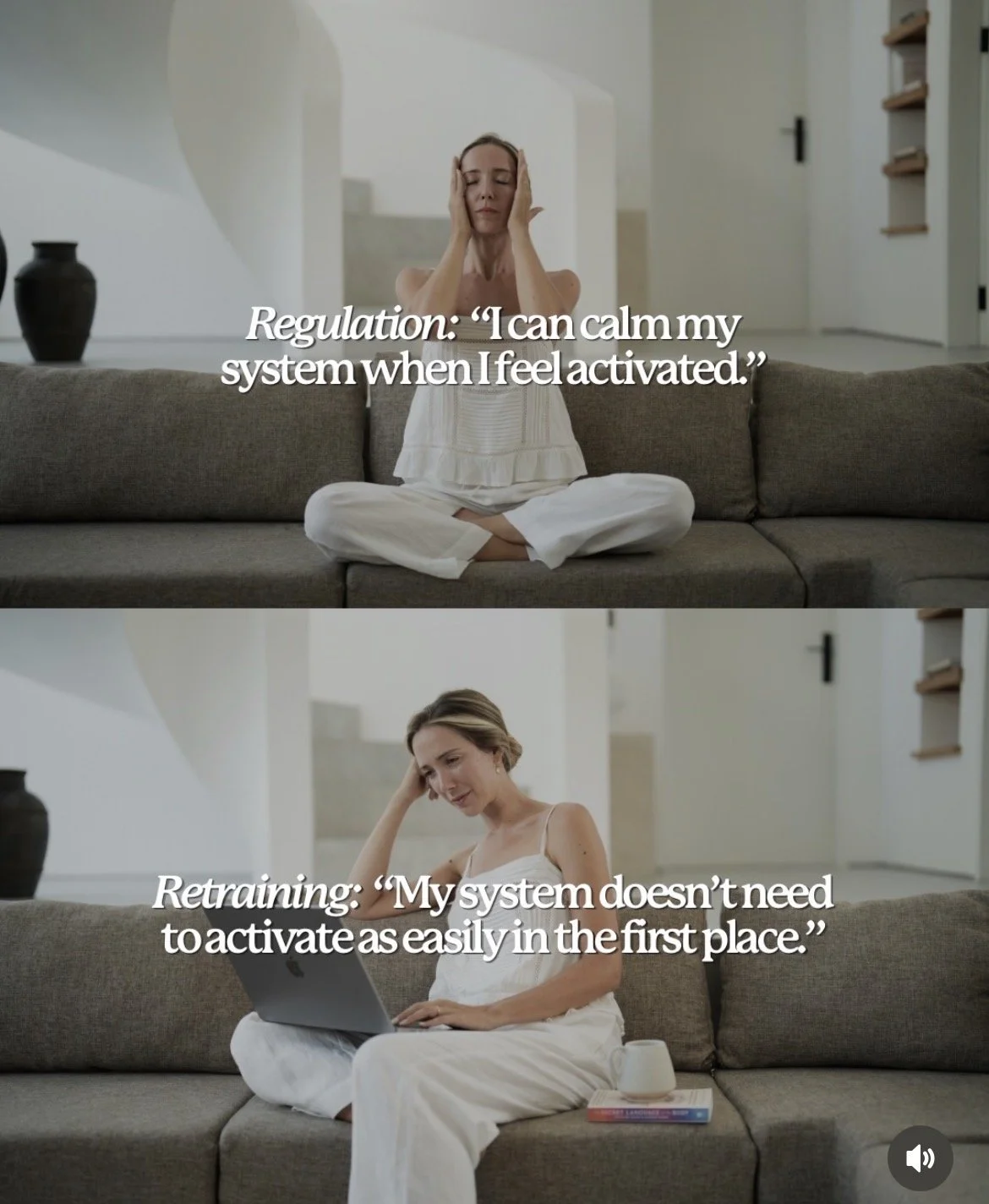
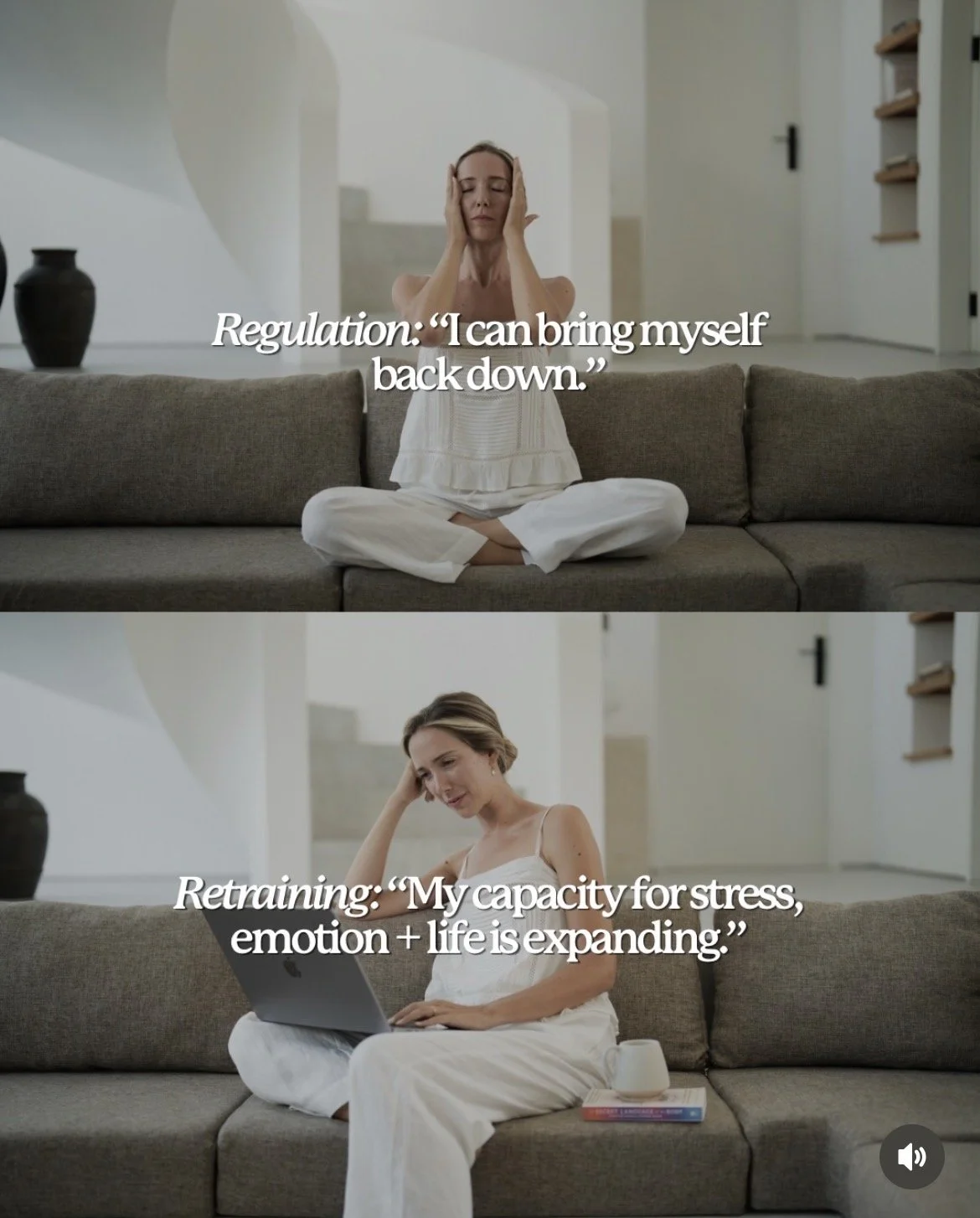
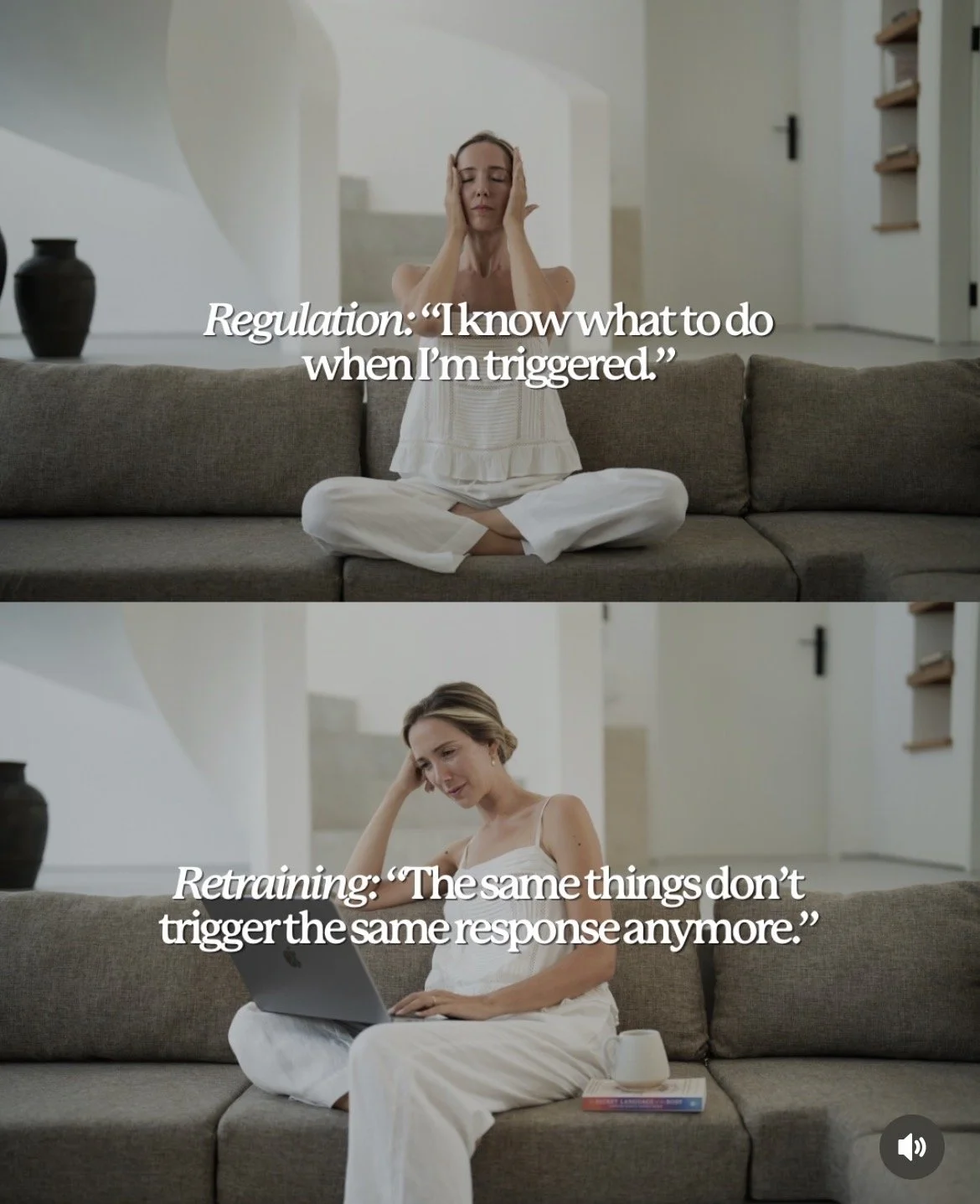
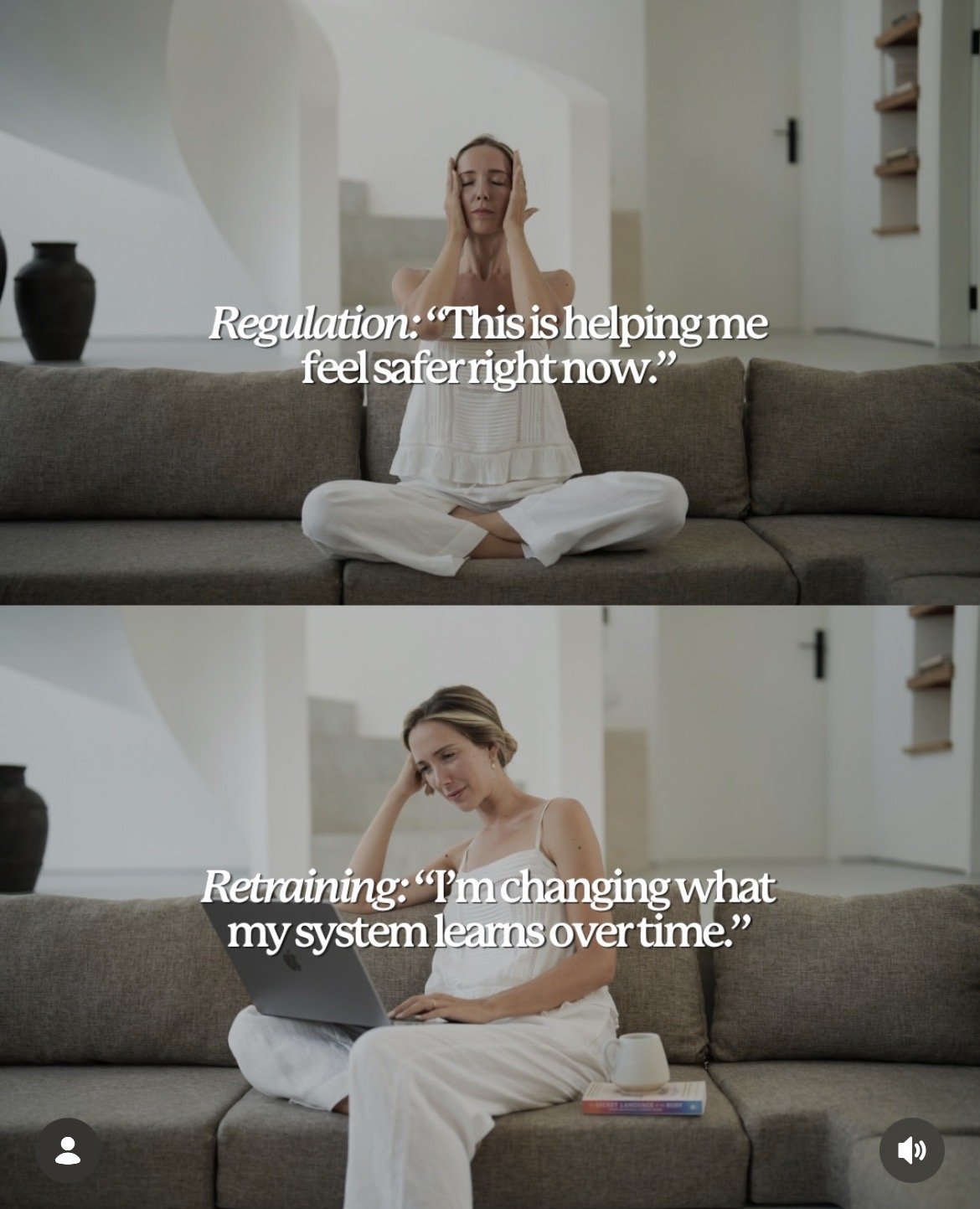
Photo Credit: Instagram @iamjenmann
There are many, many factors that can contribute to anxiety, but this list is a good point of reference. When looking for a therapist or talking to your provider, make sure that these things are being considered!
And as always, don’t forget to be an advocate for yourself. The path to overcoming anxiety/panic is personal and it should be treated as such. It takes time, consideration, and intentional effort from you! What works for someone else might not be the best option for you and that is why it is important to explore all of your options and to be as informed as possible. I hope that whatever you find here helps you on that path <3